
Ultima Markets App
Trade Anytime, Anywhere





Important Information
This website is managed by Ultima Markets’ international entities, and it’s important to emphasise that they are not subject to regulation by the FCA in the UK. Therefore, you must understand that you will not have the FCA’s protection when investing through this website – for example:
- You will not be guaranteed Negative Balance Protection
- You will not be protected by FCA’s leverage restrictions
- You will not have the right to settle disputes via the Financial Ombudsman Service (FOS)
- You will not be protected by Financial Services Compensation Scheme (FSCS)
- Any monies deposited will not be afforded the protection required under the FCA Client Assets Sourcebook. The level of protection for your funds will be determined by the regulations of the relevant local regulator.
Note: Ultima Markets is currently developing a dedicated website for UK clients and expects to onboard UK clients under FCA regulations in 2026.
If you would like to proceed and visit this website, you acknowledge and confirm the following:
- 1.The website is owned by Ultima Markets’ international entities and not by Ultima Markets UK Ltd, which is regulated by the FCA.
- 2.Ultima Markets Limited, or any of the Ultima Markets international entities, are neither based in the UK nor licensed by the FCA.
- 3.You are accessing the website at your own initiative and have not been solicited by Ultima Markets Limited in any way.
- 4.Investing through this website does not grant you the protections provided by the FCA.
- 5.Should you choose to invest through this website or with any of the international Ultima Markets entities, you will be subject to the rules and regulations of the relevant international regulatory authorities, not the FCA.
Ultima Markets wants to make it clear that we are duly licensed and authorised to offer the services and financial derivative products listed on our website. Individuals accessing this website and registering a trading account do so entirely of their own volition and without prior solicitation.
By confirming your decision to proceed with entering the website, you hereby affirm that this decision was solely initiated by you, and no solicitation has been made by any Ultima Markets entity.
I confirm my intention to proceed and enter this website Please direct me to the website operated by Ultima Markets , regulated by the FCA in the United Kingdom

Why Is Tesla Stock Up Now? A Closer Look
Tesla (TSLA) stock has been making headlines recently, reaching new record highs. After facing a challenging 2025, the stock has rebounded impressively, hitting prices near $490 in December. So, why is Tesla stock up?
The answer lies in a combination of advancements in AI, robotics, and the company’s growing potential in autonomous vehicle technology. Here’s a breakdown of the key factors behind the surge.
Reasons Why the Tesla Stock is Up
1. Autonomy and Robotaxi Progress Spark Market Optimism
A primary driver of Tesla’s rally has been progress in its robotaxi initiative. Investors have responded positively to reports that Tesla is testing driverless robotaxis without safety monitors, particularly in Austin, Texas, where the company rolled out its limited robotaxi pilot earlier in 2025.
These developments mark a step closer to the more valuable ride‑hailing service Tesla has promised, increasing confidence that the company might unlock a new, high‑margin business beyond vehicle manufacturing.
Recent reports show Tesla stock is trading in a technical buy zone, helped by both robotaxi excitement and improved investor sentiment surrounding autonomous testing videos showing unsupervised Model Y rides.
2. Court Ruling Reinstating Musk’s Pay Package Adds Confidence
Market sentiment has also been buoyed by a Delaware Supreme Court ruling that reinstated Elon Musk’s 2018 Tesla compensation plan. This decision came after years of legal disputes and effectively restored the CEO’s award, which was seen as a foundational element of Tesla’s long‑term incentive structure.
The news triggered a positive market response, contributing to a stock uptick as investors viewed the outcome as stability around leadership and vision.
Importantly, Tesla shareholders had already approved an even larger 2025 compensation package tied to ambitious milestones, including deploying millions of robotaxis and reaching a substantial market cap. That continuity in leadership incentives reinforces confidence in Tesla’s future direction.

3. Analyst Upgrades Reflect Belief in Autonomous Long‑Term Opportunity
Analysts have been revising Tesla’s outlook, notably with Mizuho raising its price target to $530 and maintaining a buy rating. The firm cited tangible progress in Tesla’s Full Self‑Driving technology and its robotaxi potential as reasons for the higher valuation.
This shift in analyst sentiment suggests that the market is increasingly valuing Tesla as a technology and autonomy play, not just an EV producer. This is an evolution that has helped support the stock price even when traditional vehicle sales have shown uneven growth.
4. Record Closing Prices Highlight Renewed Buying Pressure
Tesla stock has recently hit fresh record closing prices, including surpassing its previous highs around $489.88 a share. These marks reinforce the narrative that investor interest is not only speculative but also technically supported by strong price momentum.
This rebound has come despite broader challenges facing the EV sector and slower sales growth in some markets, demonstrating that market participants are focusing more on future optionality than near‑term unit deliveries.
5. Expansion of Ride‑Hailing Operations Bolsters Real‑World Progress
Tesla has also been expanding its ride‑hailing footprint in California, where it has registered 1,655 vehicles and 798 drivers to its robotaxi program. This represents a sizable increase from its first launch and shows tangible scaling, even if some vehicles are not yet operating fully autonomously under state AV regulations.
The expansion reflects Tesla’s broader strategy to build substantial real‑world infrastructure for its autonomous vision. While these vehicles currently operate under certain limitations, the growth in fleet size supports investor belief that Tesla is transitioning from testing to real service deployment.
6. Tesla’s Tech Approach Stands Out Among Autonomous Peers
Tesla’s autonomy strategy on emphasizing camera‑based Full Self‑Driving (FSD) rather than lidar or highly detailed maps remains a differentiator. Recent events like a major power outage in San Francisco highlighted how Tesla’s camera‑centric system reportedly continued operating while competitors temporarily paused services, underscoring distinct technological trade‑offs and sparking discussion among investors.
This ongoing comparison to rivals, particularly Waymo, keeps Tesla in the headlines and reinforces the perception of Tesla as a serious contender in large‑scale autonomous mobility. Waymo currently operates around 2,500 robo‑taxis and has logged hundreds of thousands of paid weekly rides, setting a commercial benchmark even as Tesla builds momentum.
7. Investor Psychology Shifts to Future Growth Narratives
Underlying these catalysts is a broader shift in how investors think about Tesla. After a trough earlier in 2025, Tesla stock has staged a remarkable comeback, climbing more than 20–25% from recent lows and outpacing many EV peers.
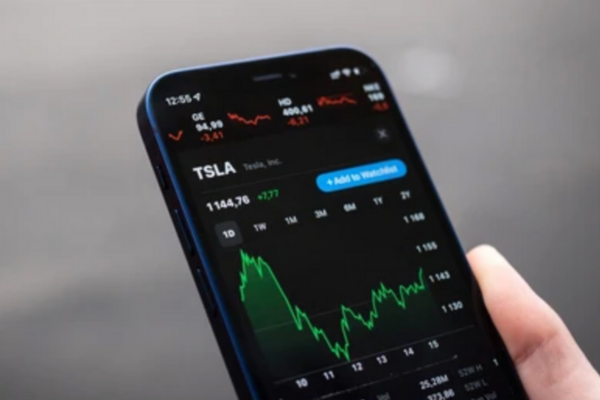
This shift reflects a renewed willingness to bet on Tesla’s long‑term growth narrative, particularly in AI, robotics, and autonomous services.
Tesla’s Stock Price in 2026
As Tesla navigates its next phase of growth, 2026 will be a defining year. The company’s success will hinge on its ability to scale its autonomous vehicle services, overcome regulatory hurdles, and maintain momentum in AI and robotics.
Analyst expectations remain optimistic, with many betting on Tesla’s ability to dominate the autonomous ride-hailing space and push further into new technological frontiers. However, the path to widespread robotaxi adoption and the full realization of Tesla’s AI-driven vision will require overcoming significant challenges.
If Tesla delivers on its ambitious goals, the stock could continue its upward trajectory, but the next few years will be critical in determining whether these expectations are fully realized.
Disclaimer: This content is provided for informational purposes only and does not constitute, and should not be construed as, financial, investment, or other professional advice. No statement or opinion contained here in should be considered a recommendation by Ultima Markets or the author regarding any specific investment product, strategy, or transaction. Readers are advised not to rely solely on this material when making investment decisions and should seek independent advice where appropriate.
Latest Articles

FOLLOW US






Ultima Markets is a member of The Financial Commission, an international independent body responsible for resolving disputes in the Forex and CFD markets.

All clients of Ultima Markets are protected under insurance coverage provided by Willis Towers Watson (WTW), a global insurance brokerage established in 1828, with claims eligibility up to US$1,000,000 per account.

Ultima Markets is the first United CFD broker to be part of the United Nations Global Compact.
FOLLOW US
TRADE WITH US
RISK DISCLOSURE
Risk Warning:
Trading leveraged financial products, including Contracts for Difference (CFDs), carries a high level of risk and may result in losses exceeding your initial investment. These products are not suitable for all investors and should only be traded with funds you can afford to lose. You do not own or have any rights to the underlying assets of these derivatives (e.g., entitlement to dividends). Please ensure you fully understand the associated risks. Before trading, consider your level of experience, investment objectives, and seek independent financial advice if necessary. Refer to our legal documents and disclosures before making any trading decisions.
General Advice Warning:
The information provided on this website is general in nature and does not take into account your personal objectives, financial situation, or needs. Before acting on any advice, you should assess its appropriateness in light of your individual circumstances and consult our legal documentation.
Regional Restrictions:
The information and services on this website are not intended for residents of certain jurisdictions, including but not limited to the United States, United Kingdom, Singapore, and any jurisdictions subject to international sanctions. For further information, please contact our customer support team.
Regulatory Information:
Ultima Markets is a trading name shared amongst multiple entities operating in various jurisdictions. These following entities are authorised to operate under the Ultima Markets brand and trademarks.
-
Ultima Markets UK Limited, reference number 470325, is authorised and regulated by the Financial Conduct Authority (FCA). Registered address: 1 Blossom Yard, Fourth Floor, London, E1 6RS, UNITED KINGDOM.
-
Ultima Markets Ltd is authorised and regulated by the Financial Services Commission (FSC) of Mauritius as a Full-Service Investment Dealer (excluding Underwriting), under licence number GB 23201593.
Registered address: 2nd Floor, The Catalyst, 40 Silicon Avenue, Ebene Cybercity, 72201, Mauritius.

Copyright © 2025 Ultima Markets Ltd. All rights reserved.
-

Messenger


Continue on Messenger
Take the conversation to your Messenger account. You can return anytime.
Scan the QR code and then send the message that appears in your Messenger.
Open Messenger on this device.
-

Instagram

Continue on Instagram
Take the conversation to your Instagram account. You can return anytime.
Scan the QR code to open Instagram. Follow @ultima_markets to send a DM.
Open Instagram on this device.
-

Live Chat
-

