Important Information
This website is managed by Ultima Markets’ international entities, and it’s important to emphasise that they are not subject to regulation by the FCA in the UK. Therefore, you must understand that you will not have the FCA’s protection when investing through this website – for example:
- You will not be guaranteed Negative Balance Protection
- You will not be protected by FCA’s leverage restrictions
- You will not have the right to settle disputes via the Financial Ombudsman Service (FOS)
- You will not be protected by Financial Services Compensation Scheme (FSCS)
- Any monies deposited will not be afforded the protection required under the FCA Client Assets Sourcebook. The level of protection for your funds will be determined by the regulations of the relevant local regulator.
Note: UK clients are kindly invited to visit https://www.ultima-markets.co.uk/. Ultima Markets UK expects to begin onboarding UK clients in accordance with FCA regulatory requirements in 2026.
If you would like to proceed and visit this website, you acknowledge and confirm the following:
- 1.The website is owned by Ultima Markets’ international entities and not by Ultima Markets UK Ltd, which is regulated by the FCA.
- 2.Ultima Markets Limited, or any of the Ultima Markets international entities, are neither based in the UK nor licensed by the FCA.
- 3.You are accessing the website at your own initiative and have not been solicited by Ultima Markets Limited in any way.
- 4.Investing through this website does not grant you the protections provided by the FCA.
- 5.Should you choose to invest through this website or with any of the international Ultima Markets entities, you will be subject to the rules and regulations of the relevant international regulatory authorities, not the FCA.
Ultima Markets wants to make it clear that we are duly licensed and authorised to offer the services and financial derivative products listed on our website. Individuals accessing this website and registering a trading account do so entirely of their own volition and without prior solicitation.
By confirming your decision to proceed with entering the website, you hereby affirm that this decision was solely initiated by you, and no solicitation has been made by any Ultima Markets entity.
I confirm my intention to proceed and enter this website Please direct me to the website operated by Ultima Markets , regulated by the FCA in the United Kingdom
Ultima Markets App
Trade Anytime, Anywhere





Understanding the Random Walk Theory
The Random Walk Theory (RWT) is a foundational concept in financial markets, suggesting that stock prices and market movements evolve unpredictably, following a random, erratic path. This theory challenges traditional forecasting methods and holds profound implications for how we approach investing and market predictions. In this article, we explore the theory’s core ideas, historical context, real-world applications, and how it shapes modern investment strategies.
What is the Random Walk Theory?
The Random Walk Theory is a mathematical model proposing that stock prices follow a random path, with movements driven by unforeseen and independent factors. A “random walk” refers to a statistical process where the direction of movement cannot be predicted, much like the erratic path of a drunkard stumbling in any direction. This means that future price changes are independent of past movements, making it impossible to forecast the direction of the market.
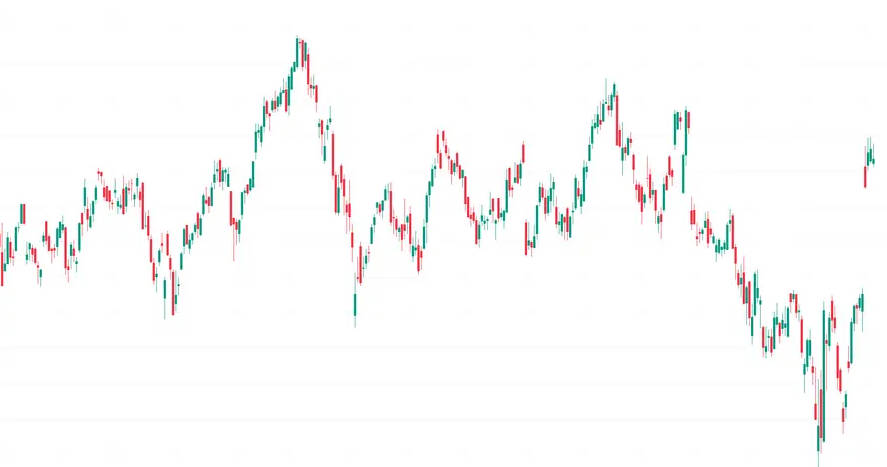
Proponents of RWT, such as Burton Malkiel, emphasize that any attempt to predict price movements, whether through fundamental analysis or technical analysis, is ultimately futile. The implication is clear: no investor can consistently outperform the market other than by sheer chance.
In Malkiel’s influential work A Random Walk Down Wall Street, he famously argued that, since prices are random, the best approach to investing is to accept market movements as unpredictable and to follow a “buy and hold” strategy, investing in a diversified selection of stocks or index funds that represent the overall market.
The History and Development of Random Walk Theory
The concept of a random walk in the stock market was first introduced by Jules Regnault in 1863, who explored the use of mathematics in analyzing stock prices. His work influenced Louis Bachelier, who published the groundbreaking paper “Theory of Speculation” in 1900, establishing the groundwork for modern financial theory. However, it was in the 1960s that Eugene Fama and Burton Malkiel popularized the idea, linking it to the Efficient Market Hypothesis (EMH), which states that stock prices always reflect all available information, making them inherently unpredictable.
Bachelier’s work, along with Regnault’s mathematical approach, shaped the foundation of what would later become a widely accepted theory in financial economics. In 1964, Paul Cootner published the seminal text “The Random Character of Stock Market Prices”, further advancing the theory and its influence on the academic community.
Key Concepts of the Random Walk Theory
- Market Efficiency: According to RWT, financial markets are efficient, meaning stock prices already reflect all known information. As such, future price movements are dictated by new, unpredictable data.
- Independence of Price Movements: RWT assumes that the movement of one security is independent of another. Price changes in one stock cannot predict the behavior of another.
- Randomness of Market Behavior: Prices move in random patterns, influenced by a variety of unpredictable external factors. This randomness means that price changes cannot be anticipated based on historical data.
- Passive Investment Strategies: Since predicting prices is futile, RWT proponents recommend passive investment strategies like index funds or ETFs, which track the performance of the broader market.
Real-World Application and the Dartboard Experiment
A notable test of the Random Walk Theory was the Dart Throwing Investment Contest devised by the Wall Street Journal in 1988. In this experiment, professional investors were pitted against random stock selectors, who chose stocks by throwing darts at a board. While professional investors won more often (61 out of 100 contests), they only managed to beat the market in 51 out of 100 contests, highlighting how close the returns were to a random outcome.
This experiment, although informal, highlighted RWT’s core message: predicting future stock prices is nearly impossible, even for seasoned professionals. It emphasized the value of a long-term, diversified approach, such as investing in index funds, to reflect the market’s overall growth without the need for trying to time or beat it.
Criticisms of the Random Walk Theory
Despite its widespread influence, RWT has faced significant criticism:
- Behavioral Finance: Critics argue that human psychology plays a major role in market movements, and investor behavior can create patterns and trends that skilled investors can exploit. The rise of behavioral finance has shed light on how cognitive biases and irrational decision-making can create market inefficiencies, potentially challenging the Random Walk Theory’s assertion of complete market randomness.
- Technical Analysis: Many traders believe that price trends and patterns exist, even in the short term, which can be identified and used to generate profits. They argue that with the right analysis, outperformance is possible. Despite RWT’s claims, proponents of technical analysis argue that historical price data and patterns offer insights into future movements.
- Long-Term Outperformance: Critics also point to successful investors like Paul Tudor Jones, who have consistently outperformed the market over extended periods, arguing that it’s not purely luck. According to RWT, a trader should only be able to outperform the overall market average by chance, yet some traders manage to generate above-average returns year after year. This raises the question: Can skilled traders truly defy the randomness that RWT suggests, or are they simply outliers in the world of unpredictable markets?
Implications for Investors
For investors, the Random Walk Theory suggests that long-term, passive strategies are the most reliable approach. Index investing allows investors to capture the overall market’s growth without trying to predict short-term fluctuations. This is supported by the fact that most active managers fail to consistently outperform the market.
In fact, over $235 billion flowed into index funds in 2016, signaling that more investors are turning to passive investment strategies based on the idea that the market is too unpredictable for active management to consistently succeed.
RWT also advocates for diversification. Rather than betting on individual stocks, the theory suggests that holding a broad portfolio of securities, often through index funds, ensures exposure to the overall market growth while mitigating risks associated with individual stock movements.
Conclusion
The Random Walk Theory offers a compelling view of the unpredictability of financial markets. While critics argue that trends and patterns do exist, RWT remains influential in shaping investment strategies, particularly in the growth of passive investing. For most investors, the theory’s fundamental message remains clear: markets are too unpredictable to consistently outperform, and a diversified, long-term approach is the most effective strategy.

As we move into an era marked by increased market volatility and complex economic factors, the Random Walk Theory will likely continue to shape our understanding of financial markets, both as a tool for understanding randomness and as a basis for more sophisticated models in finance.
Disclaimer: This content is provided for informational purposes only and does not constitute, and should not be construed as, financial, investment, or other professional advice. No statement or opinion contained here in should be considered a recommendation by Ultima Markets or the author regarding any specific investment product, strategy, or transaction. Readers are advised not to rely solely on this material when making investment decisions and should seek independent advice where appropriate.
Latest Articles


FOLLOW US






Ultima Markets is a member of The Financial Commission, an international independent body responsible for resolving disputes in the Forex and CFD markets.

All clients of Ultima Markets are protected under insurance coverage provided by Willis Towers Watson (WTW), a global insurance brokerage established in 1828, with claims eligibility up to US$1,000,000 per account.

Ultima Markets is the first United CFD broker to be part of the United Nations Global Compact.
FOLLOW US
TRADE WITH US
RISK DISCLOSURE
Risk Warning:
Trading leveraged financial products, including Contracts for Difference (CFDs), carries a high level of risk and may result in losses exceeding your initial investment. These products are not suitable for all investors and should only be traded with funds you can afford to lose. You do not own or have any rights to the underlying assets of these derivatives (e.g., entitlement to dividends). Please ensure you fully understand the associated risks. Before trading, consider your level of experience, investment objectives, and seek independent financial advice if necessary. Refer to our legal documents and disclosures before making any trading decisions.
General Advice Warning:
The information provided on this website is general in nature and does not take into account your personal objectives, financial situation, or needs. Before acting on any advice, you should assess its appropriateness in light of your individual circumstances and consult our legal documentation.
Regional Restrictions:
The information and services on this website are not intended for residents of certain jurisdictions, including but not limited to the United States, United Kingdom, Singapore, and any jurisdictions subject to international sanctions. For further information, please contact our customer support team.
Regulatory Information:
Ultima Markets is a trading name shared amongst multiple entities operating in various jurisdictions. These following entities are authorised to operate under the Ultima Markets brand and trademarks.
-
Ultima Markets UK Limited, reference number 470325, is authorised and regulated by the Financial Conduct Authority (FCA). Registered address: 1 Blossom Yard, Fourth Floor, London, E1 6RS, UNITED KINGDOM.
-
Ultima Markets Ltd is authorised and regulated by the Financial Services Commission (FSC) of Mauritius as a Full-Service Investment Dealer (excluding Underwriting), under licence number GB 23201593.
Registered address: 2nd Floor, The Catalyst, 40 Silicon Avenue, Ebene Cybercity, 72201, Mauritius.
-
Ultima Markets EU OÜ, incorporated in Estonia with registry code 17134727. Registered address: Harju maakond, Tallinn, Kristiine linnaosa, Seebi tn 1-1501, 11316. This entity does not offer regulated financial products or provide trading services.

Copyright © 2026 Ultima Markets Ltd. All rights reserved.
-

Messenger


Continue on Messenger
Take the conversation to your Messenger account. You can return anytime.
Scan the QR code and then send the message that appears in your Messenger.
Open Messenger on this device.
-

Instagram

Continue on Instagram
Take the conversation to your Instagram account. You can return anytime.
Scan the QR code to open Instagram. Follow @ultima_markets to send a DM.
Open Instagram on this device.
-

Live Chat
-

