
Ultima Markets App
Trade Anytime, Anywhere





Important Information
This website is managed by Ultima Markets’ international entities, and it’s important to emphasise that they are not subject to regulation by the FCA in the UK. Therefore, you must understand that you will not have the FCA’s protection when investing through this website – for example:
- You will not be guaranteed Negative Balance Protection
- You will not be protected by FCA’s leverage restrictions
- You will not have the right to settle disputes via the Financial Ombudsman Service (FOS)
- You will not be protected by Financial Services Compensation Scheme (FSCS)
- Any monies deposited will not be afforded the protection required under the FCA Client Assets Sourcebook. The level of protection for your funds will be determined by the regulations of the relevant local regulator.
Note: Ultima Markets is currently developing a dedicated website for UK clients and expects to onboard UK clients under FCA regulations in 2026.
If you would like to proceed and visit this website, you acknowledge and confirm the following:
- 1.The website is owned by Ultima Markets’ international entities and not by Ultima Markets UK Ltd, which is regulated by the FCA.
- 2.Ultima Markets Limited, or any of the Ultima Markets international entities, are neither based in the UK nor licensed by the FCA.
- 3.You are accessing the website at your own initiative and have not been solicited by Ultima Markets Limited in any way.
- 4.Investing through this website does not grant you the protections provided by the FCA.
- 5.Should you choose to invest through this website or with any of the international Ultima Markets entities, you will be subject to the rules and regulations of the relevant international regulatory authorities, not the FCA.
Ultima Markets wants to make it clear that we are duly licensed and authorised to offer the services and financial derivative products listed on our website. Individuals accessing this website and registering a trading account do so entirely of their own volition and without prior solicitation.
By confirming your decision to proceed with entering the website, you hereby affirm that this decision was solely initiated by you, and no solicitation has been made by any Ultima Markets entity.
I confirm my intention to proceed and enter this website Please direct me to the website operated by Ultima Markets , regulated by the FCA in the United Kingdom

Pros And Cons Of Brexit on the British Pound
Almost ten years after the referendum, the pros and cons of Brexit are visible not just in politics but in hard market data. The UK economy has followed a different path from its European neighbours, and the British pound has become one of the clearest barometers of that shift.
To keep things practical, this article briefly recaps the main pros and cons of Brexit, then focuses on what really interests traders and investors how Brexit affected sterling, inflation and the UK’s risk profile in currency markets.
Brexit And Its Main Pros And Cons
Brexit refers to the UK’s decision to leave the European Union after the June 2016 referendum, its formal exit in January 2020, and the new trade agreement that took effect in 2021.
Supporters point to three main advantages:
- Sovereignty: Parliament regains full control over laws, regulation and courts.
- Independent trade and migration policy: The UK can negotiate its own trade deals and run a single points based immigration system.
- Budget and policy freedom: Net contributions to the EU budget stop, and domestic governments decide how to redirect funds and design support for regions and sectors.
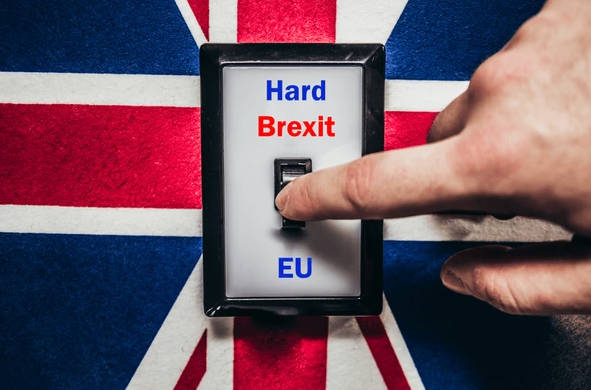
Critics emphasise the costs:
- Weaker growth and investment: A leading 2025 study estimates that by 2025 Brexit has reduced UK GDP by around 6 to 8% compared with staying in the EU, with business investment and productivity clearly lower as well.
- Lower trade with the EU: The European Central Bank and other researchers find UK EU trade has fallen by around 10 to 25% versus a remain scenario, reflecting new frictions in both directions.
- Lasting uncertainty and higher costs for firms: Especially in goods, complex supply chains and smaller exporters.
These economic outcomes are exactly what currency markets have been pricing into the pound since 2016.
How Brexit Hit The Pound In Numbers
The Immediate Shock
When it became clear that the Leave side had won, the pound fell sharply. On the morning after the vote, sterling dropped to its lowest level against the US dollar since 1985 and was on course for its biggest one day loss in modern history.
The move was not a minor adjustment. In a matter of hours, markets had to reprice:
- A different trade regime with the UK’s largest partner
- Years of political negotiation and uncertainty
- A weaker long term growth outlook relative to remaining in the EU
For traders, this was phase one of Brexit in FX a historic repricing driven by a sudden change in expectations.
From One Off Move To Persistent Discount
What matters for the pros and cons of Brexit is not just that the pound fell, but that it stayed down.
Over the following years:
- The pound remained significantly weaker on a trade weighted basis than before the referendum.
- Against major currencies, it traded well below its 2015 and early 2016 levels, even during periods of global risk appetite.
Economics Observatory and other analysis point out that this was not random volatility but a sustained “Brexit discount” driven by:
- Higher expected trade costs with Europe
- Lower expected growth and productivity
- A higher risk premium demanded by investors to hold sterling assets
In other words, the cons of Brexit as seen by markets showed up as a weaker and more fragile pound.
Growth, Trade And What They Signal For Sterling
By 2025, several strands of evidence line up:
- The Stanford based “Economic Impact of Brexit” study finds UK GDP around 6 to 8% smaller than if the UK had remained in the EU, with investment down and productivity lower.
- The European Central Bank’s review suggests UK EU trade has fallen by 10 to 25% in both directions compared with a synthetic remain path.
- The UK’s Office for Budget Responsibility judges that Brexit will leave long term productivity roughly 4% lower than it otherwise would have been.
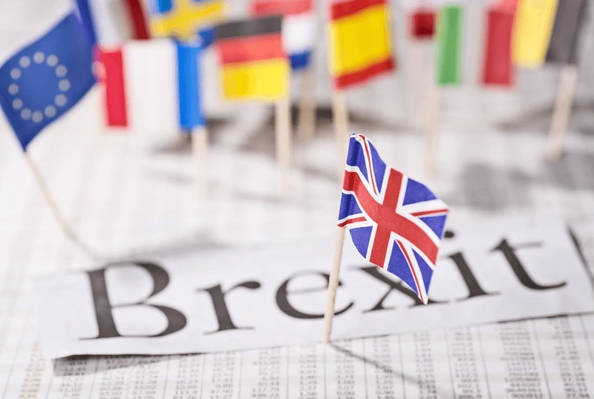
These figures matter because currencies are forward looking. Lower expected growth and productivity, and weaker trade, mean lower expected earnings and dividends in sterling. That is a clear negative for the pound in the medium term.
Inflation, Real Incomes And The FX Channel
The post referendum fall in sterling did not only hurt investors. It also pushed up prices for households.
Because the UK imports a large share of food, energy and consumer goods, a weaker pound raises the local currency cost of those imports. Studies find that:
- The depreciation after the referendum added a noticeable amount to UK inflation in 2017 and 2018
- Higher prices squeezed real wages, leaving households worse off than in a remain scenario
This is a clear example of how a macro level con of Brexit weaker currency, weaker external position filters down into everyday life.
Three Phases For Sterling After Brexit
You can think of the pound’s journey through three broad phases.
- Shock
The surprise Leave result led to a historic one day fall and the largest drop among major reserve currencies in decades. - Discount
As negotiations dragged on and the risk of a very hard Brexit or no deal exit ebbed and flowed, sterling remained under pressure. Volatility spiked around key votes and deadlines, and correlations with other majors shifted as traders treated the pound as a risk sentiment barometer. - Partial Recovery
Once the Trade and Cooperation Agreement came into force and political headlines calmed, the pound regained some ground. On a trade weighted basis, it moved closer to its pre referendum range, but not all the way back, and investors still treat it as more volatile and more headline sensitive than before 2016.
Through all three phases, the common thread is that the market has had to weigh the pros and cons of Brexit and assign a price to UK risk.
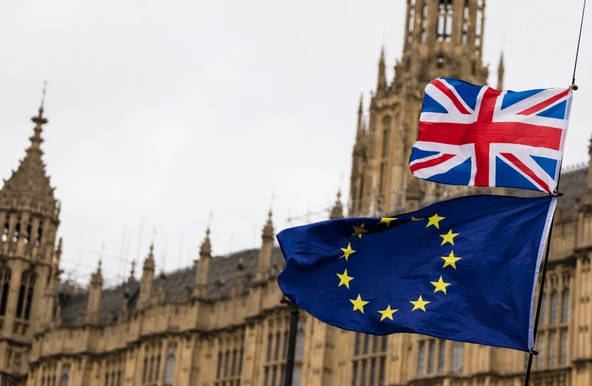
What This Means For Traders And Investors
For traders, the key takeaway is that Brexit has changed both the level and behaviour of the pound.
- Level: The UK now carries a structural discount relative to the remain world that many economic models had forecast. Even with some recovery, the pound still trades in a range that reflects weaker trade and productivity expectations.
- Behaviour: Sterling reacts more sharply to UK specific headlines, particularly those involving relations with the EU, regulatory changes or fiscal policy. It also requires more active hedging for institutions that do not want currency swings to dominate their returns.
For long term investors, the pros and cons of Brexit show up in asset allocation decisions. A credible plan to use new freedoms to raise productivity and rebuild EU relations can slowly reduce the risk premium on sterling. Continued uncertainty, by contrast, keeps that premium in place.
Final Thoughts
In political terms, the pros of Brexit are mainly about control over laws, borders and deals. The cons are about economic costs. In currency terms, the verdict so far is clear.
Brexit delivered a weaker pound, higher inflation and a higher risk premium, then a partial recovery as the new relationship with Europe settled. Whether sterling can fully shed its Brexit discount now depends on what the UK does with the freedoms it has gained and whether future policy choices rebuild confidence in the long term story behind the currency.
Disclaimer: This content is provided for informational purposes only and does not constitute, and should not be construed as, financial, investment, or other professional advice. No statement or opinion contained here in should be considered a recommendation by Ultima Markets or the author regarding any specific investment product, strategy, or transaction. Readers are advised not to rely solely on this material when making investment decisions and should seek independent advice where appropriate.
Latest Articles



FOLLOW US






Ultima Markets is a member of The Financial Commission, an international independent body responsible for resolving disputes in the Forex and CFD markets.

All clients of Ultima Markets are protected under insurance coverage provided by Willis Towers Watson (WTW), a global insurance brokerage established in 1828, with claims eligibility up to US$1,000,000 per account.

Ultima Markets is the first United CFD broker to be part of the United Nations Global Compact.
FOLLOW US
TRADE WITH US
RISK DISCLOSURE
Risk Warning:
Trading leveraged financial products, including Contracts for Difference (CFDs), carries a high level of risk and may result in losses exceeding your initial investment. These products are not suitable for all investors and should only be traded with funds you can afford to lose. You do not own or have any rights to the underlying assets of these derivatives (e.g., entitlement to dividends). Please ensure you fully understand the associated risks. Before trading, consider your level of experience, investment objectives, and seek independent financial advice if necessary. Refer to our legal documents and disclosures before making any trading decisions.
General Advice Warning:
The information provided on this website is general in nature and does not take into account your personal objectives, financial situation, or needs. Before acting on any advice, you should assess its appropriateness in light of your individual circumstances and consult our legal documentation.
Regional Restrictions:
The information and services on this website are not intended for residents of certain jurisdictions, including but not limited to the United States, United Kingdom, Singapore, and any jurisdictions subject to international sanctions. For further information, please contact our customer support team.
Regulatory Information:
Ultima Markets is a trading name shared amongst multiple entities operating in various jurisdictions. These following entities are authorised to operate under the Ultima Markets brand and trademarks.
-
Ultima Markets UK Limited, reference number 470325, is authorised and regulated by the Financial Conduct Authority (FCA). Registered address: 1 Blossom Yard, Fourth Floor, London, E1 6RS, UNITED KINGDOM.
-
Ultima Markets Ltd is authorised and regulated by the Financial Services Commission (FSC) of Mauritius as a Full-Service Investment Dealer (excluding Underwriting), under licence number GB 23201593.
Registered address: 2nd Floor, The Catalyst, 40 Silicon Avenue, Ebene Cybercity, 72201, Mauritius.

Copyright © 2025 Ultima Markets Ltd. All rights reserved.
-

Messenger


Continue on Messenger
Take the conversation to your Messenger account. You can return anytime.
Scan the QR code and then send the message that appears in your Messenger.
Open Messenger on this device.
-

Instagram

Continue on Instagram
Take the conversation to your Instagram account. You can return anytime.
Scan the QR code to open Instagram. Follow @ultima_markets to send a DM.
Open Instagram on this device.
-

Live Chat
-

