This website is managed by Ultima Markets’ international entities, and it’s important to emphasise that they are not subject to regulation by the FCA in the UK. Therefore, you must understand that you will not have the FCA’s protection when investing through this website – for example:
You will not be guaranteed Negative Balance Protection
You will not be protected by FCA’s leverage restrictions
You will not have the right to settle disputes via the Financial Ombudsman Service (FOS)
You will not be protected by Financial Services Compensation Scheme (FSCS)
Any monies deposited will not be afforded the protection required under the FCA Client Assets Sourcebook. The level of protection for your funds will be determined by the regulations of the relevant local regulator.
Note: UK clients are kindly invited to visit https://www.ultima-markets.co.uk/. Ultima Markets UK expects to begin onboarding UK clients in accordance with FCA regulatory requirements in 2026.
If you would like to proceed and visit this website, you acknowledge and confirm the following:
1.The website is owned by Ultima Markets’ international entities and not by Ultima Markets UK Ltd, which is regulated by the FCA.
2.Ultima Markets Limited, or any of the Ultima Markets international entities, are neither based in the UK nor licensed by the FCA.
3.You are accessing the website at your own initiative and have not been solicited by Ultima Markets Limited in any way.
4.Investing through this website does not grant you the protections provided by the FCA.
5.Should you choose to invest through this website or with any of the international Ultima Markets entities, you will be subject to the rules and regulations of the relevant international regulatory authorities, not the FCA.
Ultima Markets wants to make it clear that we are duly licensed and authorised to offer the services and financial derivative products listed on our website. Individuals accessing this website and registering a trading account do so entirely of their own volition and without prior solicitation.
By confirming your decision to proceed with entering the website, you hereby affirm that this decision was solely initiated by you, and no solicitation has been made by any Ultima Markets entity.
What is the currency of Peru? It is the Peruvian sol, represented by S/ or PEN. Learn the basics of what moves the PEN and how this currency is traded.
What Is the Currency of Peru? Is it SOL?
Peru blends deep history with a modern and open economy. If you’re wondering what is the currency of Peru, the answer is simple, it is the Peruvian sol. If you are planning a trip, paying suppliers, or keeping an eye on Latin American FX, it helps to know what is the currency of Peru and how it works in daily life. This guide starts with the essentials, adds a short history for context, then offers a light trader’s view so you can read market headlines with confidence.
Peru’s National Currency: The Peruvian Sol
Peru’s currency is the Peruvian sol.
ISO code PEN
Symbol S/
Subunit 1 sol equals 100 céntimos
Issuer Central Reserve Bank of Peru BCRP
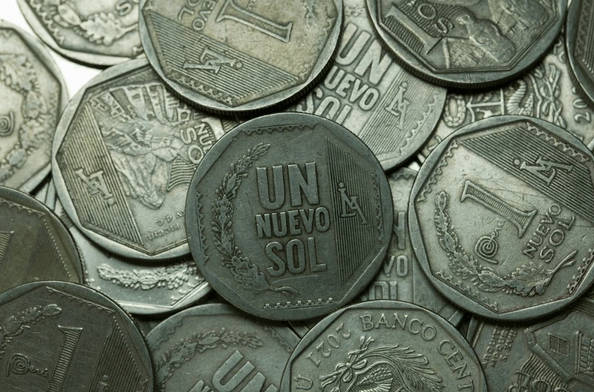
The unit was called nuevo sol from 1991 until a name standardisation in 2015. Today it is simply sol with the symbol S/.
Is Sol A Currency?
Yes. Sol is the official legal tender of Peru. The international FX market quotes it as PEN, most commonly in the pairs USD PEN and EUR PEN. If you trade emerging-market FX, you’ll most often encounter PEN in spot and short-dated NDFs, with better liquidity during New York and broader LatAm hours.
People sometimes get confused about the name Sol for a few reasons. The Spanish plural “soles” can throw off non-Spanish speakers who think it’s a different term. And just to be clear, Peru’s sol (PEN) has nothing to do with Solana’s SOL. They are totally separate things.
A Short History of the SOL
A little background helps explain why you may still see older terms in circulation and why policy credibility matters today.
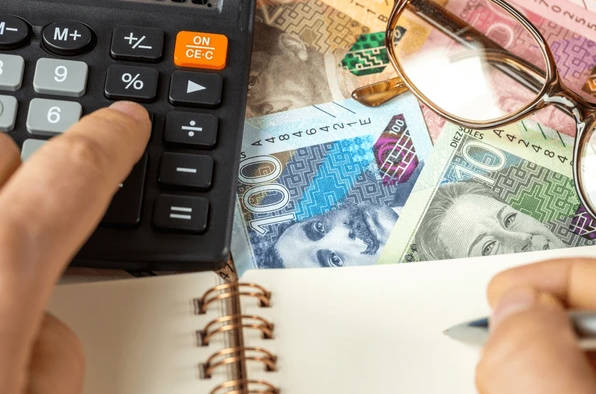
Peru moved from high inflation in the late 1980s to the nuevo sol in 1991 to stabilise prices. In 2015 the name was simplified to sol and the symbol standardised to S/. A new banknote family entered circulation between 2021 and 2023 with modern security features. This path of reform and modernisation underpins confidence in the currency and the current policy setup.
If You Are Travelling in Peru What You Need to Know
Once you know what is the currency of Peru, these practical tips make everyday payments with the Peruvian sol simple.
How to pay: Cards are common in cities while markets and small shops prefer cash. Keep S/10 and S/20 notes for taxis and kiosks.
Rounding at the till: One and five céntimo coins are no longer used. Small cash totals may be rounded. Card and mobile payments charge the exact amount.
Card tip: If a terminal asks to charge you in your home currency, choose S/ for better rates.
Mobile wallets you will see: Locals use Yape and Plin for QR payments. Visitors usually rely on cards and cash.
Spotting fakes: Touch for raised ink, look for the watermark against light, and tilt to see the thread and colour shift on newer notes.
Why PEN Matters to the Market
After covering what is the currency of Peru in daily life, here’s why PEN appears in market headlines. Peru is a meaningful commodities exporter, especially copper, so changes in trade income, inflation, and interest rate expectations can affect the currency. The central bank’s rules based approach also helps keep the sol comparatively steady for the region.
What Moves PEN?
You do not need a full trading playbook to understand the headlines. A few points go a long way.
Commodity backdrop (especially copper) Strong copper prices improve export receipts and usually support PEN; weak prices can do the opposite.
Inflation and policy signals Monthly CPI and the central bank’s statements shape the interest-rate path. Tighter policy or cooling inflation can lift confidence in the currency.
Growth and trade data Mining output, the trade balance, and broader activity numbers (retail, construction) influence how investors see Peru’s momentum.
Global dollar and rates A firmer US dollar or rising US real yields often weigh on Latin American FX, including PEN.
Regional risk mood During risk-on or risk-off swings, PEN may move alongside peers like CLP and COP, even when local news is quiet.
Seasonal and flow factors Dividend cycles, corporate hedging, and holiday liquidity can nudge spreads and intraday behaviour without changing the bigger picture.
Market Structure and Liquidity
A quick look at how PEN actually trades will help you read broker notes and understand intraday moves without going too deep.
Instruments Spot USD/PEN, short-dated NDFs (out to ~1 year), plus forwards and swaps for corporate hedging.
Participants Local banks, global dealers with LatAm books, exporters/importers, miners, real-money funds, and macro/EM FX funds.
Trading hours Best depth from London lunchtime into New York afternoon.
Costs Spreads are tightest in the London–New York overlap and can widen around major data or thin holiday sessions. Execution improves when you use firm pricing and avoid local fixings unless you mean to cross them.
Policy Framework at a Glance
Peru’s central bank (BCRP) aims for low, stable inflation and smooth markets rather than a fixed exchange rate. That backdrop matters for how PEN behaves.
Mandate: Price stability around an explicit inflation target, with an eye on output and financial stability.
Exchange-rate regimeManaged float: the BCRP may use spot or derivatives to smooth disorderly moves, not defend a hard level.
Rates channel: Policy-rate changes filter through money markets and credit conditions, influencing FX via interest differentials.
Reserves and prudence: Healthy reserves and conservative policy anchor expectations and reduce tail risk in stress periods.
Trading takeaway
PEN tends to move on relative rates, local inflation trends, and terms of trade more than on pure speculative flows; sharp moves often mean-revert if fundamentals don’t confirm.
Conclusion
The Peruvian sol PEN S/ is straightforward once you know the basics. You will use modern banknotes, simple rounding rules, and familiar payment options. For a light market view, watch copper prices, inflation updates, and central bank messages. With that, you are ready for everyday spending and better prepared to understand the news about Peru’s currency.
Share Now
Disclaimer:This content is provided for informational purposes only and does not constitute, and should not be construed as, financial, investment, or other professional advice. No statement or opinion contained herein should be considered a recommendation by Ultima Markets or the author regarding any specific investment product, strategy, or transaction. Readers are advised not to rely solely on this material when making investment decisions and should seek independent advice where appropriate.
Thank you for visiting the Ultima Markets website. Please note that this website is intended for individuals residing in jurisdictions where access is permitted by law. Ultima and its affiliated entities do not operate in your home jurisdiction.
By clicking ‘Acknowledge’, you confirm that you are entering this website solely on your own initiative and not as a result of any specific marketing outreach. You wish to obtain information from this website based on reverse solicitation principles, in accordance with the applicable laws of your home jurisdiction.