This website is managed by Ultima Markets’ international entities, and it’s important to emphasise that they are not subject to regulation by the FCA in the UK. Therefore, you must understand that you will not have the FCA’s protection when investing through this website – for example:
You will not be guaranteed Negative Balance Protection
You will not be protected by FCA’s leverage restrictions
You will not have the right to settle disputes via the Financial Ombudsman Service (FOS)
You will not be protected by Financial Services Compensation Scheme (FSCS)
Any monies deposited will not be afforded the protection required under the FCA Client Assets Sourcebook. The level of protection for your funds will be determined by the regulations of the relevant local regulator.
Note: UK clients are kindly invited to visit https://www.ultima-markets.co.uk/. Ultima Markets UK expects to begin onboarding UK clients in accordance with FCA regulatory requirements in 2026.
If you would like to proceed and visit this website, you acknowledge and confirm the following:
1.The website is owned by Ultima Markets’ international entities and not by Ultima Markets UK Ltd, which is regulated by the FCA.
2.Ultima Markets Limited, or any of the Ultima Markets international entities, are neither based in the UK nor licensed by the FCA.
3.You are accessing the website at your own initiative and have not been solicited by Ultima Markets Limited in any way.
4.Investing through this website does not grant you the protections provided by the FCA.
5.Should you choose to invest through this website or with any of the international Ultima Markets entities, you will be subject to the rules and regulations of the relevant international regulatory authorities, not the FCA.
Ultima Markets wants to make it clear that we are duly licensed and authorised to offer the services and financial derivative products listed on our website. Individuals accessing this website and registering a trading account do so entirely of their own volition and without prior solicitation.
By confirming your decision to proceed with entering the website, you hereby affirm that this decision was solely initiated by you, and no solicitation has been made by any Ultima Markets entity.
ETP meaning explained for investors. Understand Exchange Traded Products, how they trade, types like ETF, ETN, ETC, and simple ways to use them.
Exchange Traded Product ETP Meaning Explained
You will hear investors say ETP quite often. If you are new to investing and want a clear start, ETP meaning refers to the definition of an Exchange Traded Product. An ETP is a security that trades on a stock exchange throughout the day and aims to reflect the performance of a specific index, asset, or rules based strategy. You place orders the same way you would for a stock, but the exposure comes from what the product tracks.
Before choosing one, it helps to understand the structures available, how pricing stays near value, and the key risks to check. We will move through those ideas in that order.
What ETP Meaning Covers In Investing
An ETP is built to track something you can name. That could be a broad stock index, a basket of bonds, a single commodity like gold, a currency mix, or a defined strategy. You place an order through your broker the same way you would for a stock. Prices update all day, so you always see where you stand. This is why many people use ETPs as the building blocks of a portfolio.
Now that the idea is clear, let’s look at the common structures you will meet.
The Main Types Of ETPs
To make sense of the ETP family, start by separating it into three widely used structures. Each one helps clarify ETP meaning in practice because each delivers exposure in a different way.
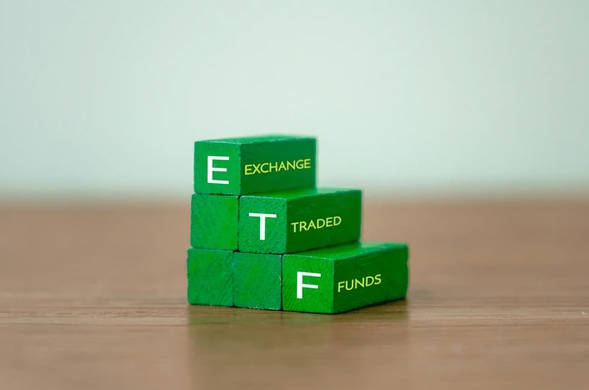
ETF Exchange Traded Fund An ETF is a fund that lists on an exchange. It usually holds a portfolio of securities or uses futures to follow a benchmark. People use ETFs for broad markets, sectors, bonds, and themes. They are popular because they are simple and widely available.
ETN Exchange Traded Note An ETN is an unsecured note from a bank. It does not hold the underlying assets. Your result depends on the index it tracks and on the strength of the issuer. Because of that, credit risk is part of the decision with ETNs. Knowing this helps you apply ETP meaning with the right risk lens.
ETC Exchange Traded Commodity In many European markets, single commodity exposure often comes through ETCs. Some are physically backed, such as gold held in a vault. Others use derivatives to mirror prices. Investors choose ETCs for gold, silver, oil, and industrial metals.
With the structures in mind, it helps to know how prices stay in line with value.
How Pricing Stays Close To Value
ETPs use a process called creation and redemption. Large market participants can swap baskets of securities or cash for new ETP shares and can redeem shares for the basket. When the market price drifts away from the value of the holdings, this process encourages it to move back toward net asset value. You still get intraday trading while prices usually stay near fair value.
Now let’s link this to how investors actually use ETPs.
Why Investors Use ETPs
Access And Convenience One trade can give you a whole market or a focused theme. That saves time and reduces the hassle of buying many separate positions.
Transparency And Control You can see live prices during market hours. Most products publish details about holdings or methods on a regular schedule.
Cost Awareness Large ETFs often have low headline fees. Real costs also include bid ask spreads and any premium or discount to value, so it is worth a quick check before you trade.
Flexible Portfolio Design Many investors use ETFs for core equity and bond exposure. They add ETCs or other ETPs for commodities, currencies, or strategies. Because ETPs trade all day, it is easy to rebalance or add hedges when conditions change.
Benefits are only one side. Good decisions also consider risk.
Key Risks Of Exchange Traded Products
Market And Tracking Risk Results can differ from the target index. Look at tracking error, how the index is built, and whether the product uses physical or synthetic replication.
Structure Risk ETNs are unsecured notes and carry issuer credit risk. ETCs may be physically backed or derivatives based. Each approach has different operational and counterparty considerations.
Leverage And Inverse Behavior Leveraged and inverse products target daily moves. Over several days, compounding can make results differ from the path of the index. These tools are usually for short holding periods and need close monitoring.
Liquidity And Trading Costs Liquidity varies by product and by the market it tracks. Check typical spreads, depth, and trading hours. Limit orders can help.
Futures And Roll Effects Futures based commodity products can be affected by contango and backwardation. Know which contracts they hold and how they roll to fully understand ETP meaning in commodities.
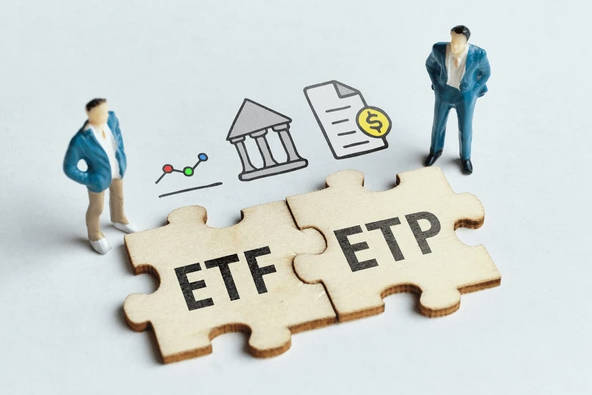
ETF Versus ETN Versus ETC At A Glance
A quick side by side view helps you pick the right structure for the job.
Feature
ETF
ETN
ETC
Legal Form
Fund
Unsecured note
Commodity ETP
Holds Assets
Usually yes or via futures
No
Physical or derivatives
Main Risk Lens
Market and tracking
Issuer credit and market
Commodity and structure
Common Uses
Broad equity, bonds, sectors, themes
Hard to access indexes or strategies
Gold, silver, oil, metals
What To Look For Before You Buy An ETP
Define The Role Is this a core holding or a tactical idea. Your answer sets size, holding period, and risk tolerance.
Check The Index Read the rules. Note what gets included, how it is weighted, and how often it rebalances.
Review Costs And Liquidity Consider the expense ratio, typical spread, any premium or discount to value, and average daily volume.
Understand The Structure Confirm whether it is a fund, a note, or a commodity vehicle. If it uses derivatives, learn how counterparties are managed. If it is physically backed, check custody details.
Plan The Trade Use limit orders when spreads are wide, avoid thin pre open and post close windows, and be mindful of major data releases.
Conclusion
ETP meaning covers a family of exchange traded tools that make it easier to get the exposure you want. Pick the structure that fits your goal, understand how pricing stays close to value, and run a quick risk and cost check before you buy. Used thoughtfully, ETPs are clear, flexible, and effective building blocks for both core allocation and tactical ideas.
Share Now
Disclaimer:This content is provided for informational purposes only and does not constitute, and should not be construed as, financial, investment, or other professional advice. No statement or opinion contained herein should be considered a recommendation by Ultima Markets or the author regarding any specific investment product, strategy, or transaction. Readers are advised not to rely solely on this material when making investment decisions and should seek independent advice where appropriate.
Thank you for visiting the Ultima Markets website. Please note that this website is intended for individuals residing in jurisdictions where access is permitted by law. Ultima and its affiliated entities do not operate in your home jurisdiction.
By clicking ‘Acknowledge’, you confirm that you are entering this website solely on your own initiative and not as a result of any specific marketing outreach. You wish to obtain information from this website based on reverse solicitation principles, in accordance with the applicable laws of your home jurisdiction.