This website is managed by Ultima Markets’ international entities, and it’s important to emphasise that they are not subject to regulation by the FCA in the UK. Therefore, you must understand that you will not have the FCA’s protection when investing through this website – for example:
You will not be guaranteed Negative Balance Protection
You will not be protected by FCA’s leverage restrictions
You will not have the right to settle disputes via the Financial Ombudsman Service (FOS)
You will not be protected by Financial Services Compensation Scheme (FSCS)
Any monies deposited will not be afforded the protection required under the FCA Client Assets Sourcebook. The level of protection for your funds will be determined by the regulations of the relevant local regulator.
Note: UK clients are kindly invited to visit https://www.ultima-markets.co.uk/. Ultima Markets UK expects to begin onboarding UK clients in accordance with FCA regulatory requirements in 2026.
If you would like to proceed and visit this website, you acknowledge and confirm the following:
1.The website is owned by Ultima Markets’ international entities and not by Ultima Markets UK Ltd, which is regulated by the FCA.
2.Ultima Markets Limited, or any of the Ultima Markets international entities, are neither based in the UK nor licensed by the FCA.
3.You are accessing the website at your own initiative and have not been solicited by Ultima Markets Limited in any way.
4.Investing through this website does not grant you the protections provided by the FCA.
5.Should you choose to invest through this website or with any of the international Ultima Markets entities, you will be subject to the rules and regulations of the relevant international regulatory authorities, not the FCA.
Ultima Markets wants to make it clear that we are duly licensed and authorised to offer the services and financial derivative products listed on our website. Individuals accessing this website and registering a trading account do so entirely of their own volition and without prior solicitation.
By confirming your decision to proceed with entering the website, you hereby affirm that this decision was solely initiated by you, and no solicitation has been made by any Ultima Markets entity.
What is leverage trading? How to boost forex profits?
Summary:
Explore leverage trading principles and applications, master the latest forex and CFD leverage strategies to boost capital efficiency and manage risks effectively!
What is leverage trading? How to boost forex profits?
“Want to buy a condo in Taipei for 300,000 TWD? It’s possible.” Just like real estate investment uses a “down payment” to leverage assets, leverage tools in forex trading enable small investors to participate in the international market.
In the fast-changing financial market, “leverage” is undoubtedly a powerful tool that multiplies capital efficiency. Especially in the low-volatility forex market, leverage allows investors to use smaller funds to engage in larger-scale trades. However, leverage can amplify profits as well as risks. This article will fully explain the principles, advantages and disadvantages, and practical strategies of leverage, helping you take the key step toward efficient leverage use.
What is leverage? Why is leverage indispensable in forex trading?
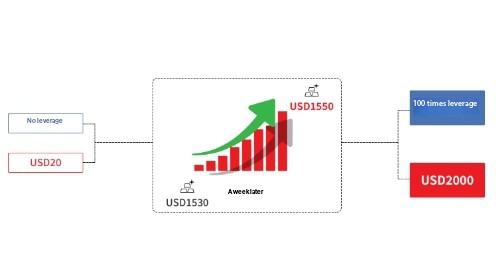
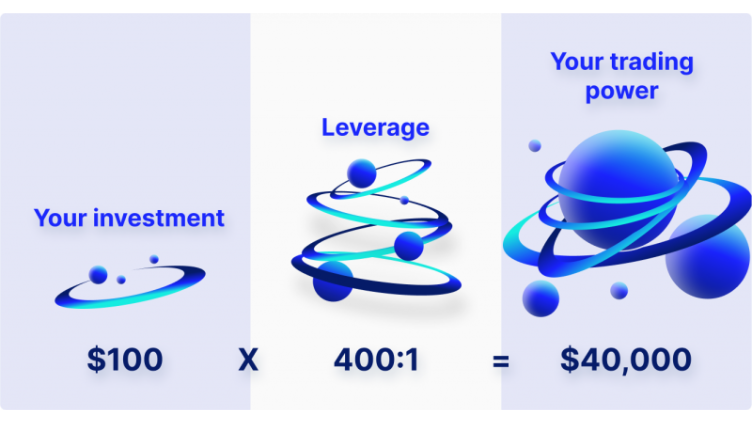
Simply put, leverage is a financial tool that amplifies capital, acting as a “capital multiplier.” Leverage trading means brokers lend funds to investors, allowing them to hold larger positions with less principal. For example, if you have $1,000 capital and use 1:100 leverage, you can operate a position worth up to $100,000. This enables small capital to enter the global forex market for strategic asset allocation.
In Taiwan’s investment environment, due to low interest rates and limited stock volatility, more investors are turning to the forex and CFD markets, where leverage is the core mechanism. Leverage trading allows you to effectively participate in short-term market fluctuations and seize more opportunities, even with just a few hundred dollars.
Leverage Principle: How Does It Work? Practical Example Explanation
What is Margin?
The operation of leverage is not difficult to understand; the key lies in the “margin system.” The so-called “margin system” means that in financial trading (such as forex, stocks, futures, etc.), investors do not need to pay the full transaction amount upfront, but only a portion as margin, allowing participation in larger-scale trades.
Although leverage trading and margin trading have different names, their core is the same—amplifying positions by borrowing funds. Some brokers indicate leverage as a multiple of usable funds (e.g., 1:100), while others show the required margin ratio (e.g., 1%), which are two expressions of the same mechanism.
Basic Calculation Method for Leverage Trading
Leverage Ratio Calculation Formula:
Leverage Ratio = Total Transaction Value ÷ Required Margin
Step-by-Step Analysis:
Confirm Total Transaction Value
This is the actual position size you operate (e.g., 1 lot EUR/USD = 100,000 euros).
Calculate Required Margin
Margin = Total Transaction Value ÷ Leverage Ratio
Example:
In 2025, USD/TWD exchange rate = 30.5. Assuming using 1:100 leverage to trade 1 lot (100,000 USD) USD/JPY:
Margin Calculation: 100,000 USD ÷ 100 = 1,000 USD
Converted to TWD: 1,000 USD × 30.5 = 30,500 TWD
Calculation Formula for Tradable Position:
Tradable Position = Own Capital × Leverage Ratio
If you have $1,000 capital and use 1:100 leverage, it means you can hold a position worth $100,000 (i.e., 1 lot EUR/USD).
Example:
EUR/USD rate = 1.1000, 1 lot = 100,000 units
Leverage 1:100 → actual margin required is only $1,000
If the rate rises to 1.1050, you can profit $500 (excluding fees)
However, if the market moves against you, losses will be magnified proportionally. Therefore, understanding how leverage affects profit and loss is the first step to successful trading.
Advantages of Leverage: Amplify Opportunities, Improve Capital Efficiency
Small Investors Can Participate in Big Markets
The most attractive feature of leverage is that it allows small capital to have a big impact, breaking through capital barriers. Especially in the forex market, common leverage ranges from 1:50 to 1:2000, offering great flexibility.
Enhance Short-term Trading Efficiency
With leverage, you can profit from small exchange rate movements, particularly suitable for intraday trading and scalping strategies.
Flexible Long and Short Positions
Forex CFD products support two-way trading, combined with leverage to amplify profit potential, providing opportunities regardless of market rising or falling.
Risks of Leverage: Amplifies Profits but Can Also Amplify Losses
Leverage is powerful, but improper use can lead to margin calls. This happens when the account equity falls below a certain margin level, triggering forced liquidation to protect the account from going negative.
What Causes Margin Calls?
Sharp market reversals
Using excessive leverage without stop-loss
Losing control of multiple positions in a short time
For example, at Ultima Markets, the margin call level is 50%, with negative balance protection. When account equity falls below this threshold, positions are automatically closed.
How to Reduce Leverage Risks?
Set stop-loss for every trade
Strictly control single trade risk (recommended 1-3%)
Avoid “all-in” trading, especially under high leverage conditions
Which Financial Products Allow Leverage Trading?
Leverage trading is widely applied across various financial products. Below are common types that support leverage:
1. Forex
Features: UM leverage up to 1:2000, making it one of the most flexible markets for leverage application.
Suitable for: Traders skilled in short-term or swing trading, profiting from small price fluctuations.
2. Contracts for Difference (CFD)
Wide range of products, including:
Precious metals (e.g., gold, silver)
Energy commodities (e.g., crude oil, natural gas)
Index CFDs (e.g., Dow Jones, DAX, Taiwan Index))
Stock CFDs (e.g., Apple, Tesla)
Cryptocurrency CFDs (e.g., Bitcoin, Ethereum)
Features: Supports both long and short positions, ideal for leveraging to capture two-way market moves.
3. Futures
Includes stock index futures, commodity futures, forex futures, etc.
Features: Standardized contracts allowing trading of large contracts with less capital via leverage, but have fixed expiration dates.
4. Options
Although not direct leverage, options inherently have leverage characteristics.
Features: Small capital can participate in high-priced assets; risk and reward are asymmetric.
5. Cryptocurrency Leverage Contracts
Features: Highly volatile and risky; platforms usually offer leverage from 1:2 to 1:100.
Note: Cryptocurrency markets are less regulated, so risk management mechanisms require special attention.
How to Use Leverage Correctly? Practical Tips for New Traders
1. How to Choose the Right Leverage Ratio?
Leverage ratio should be chosen based on your risk tolerance and trading experience:
Investor Type
Recommended Leverage Range
Description
Beginner/Conservative
1:50 ~ 1:200
Control risk, keep capital flexible
Steady/Advanced
1:500 ~ 1:1000
More effective with technical analysis and stop loss
Short-term/High-frequency
1:1000 ~ 1:2000
Suitable for disciplined traders with strategies
Tip: Practice with a demo account under different leverage levels to find the style that fits you best.
24/7 Traditional Chinese service for leverage & technical help
Free Practice with Demo Account
$100,000 virtual funds for risk-free leverage strategy practice
Master leverage and amplify your power the right way
In a fast-changing market, leverage is not just risk but a key tool for efficient capital use. The key is understanding its mechanics, risks, and using the right trading platform.
Choosing a compliant, transparent platform with high leverage options and strong risk controls will greatly boost your success. Ultima Markets is your best choice to master leverage and amplify your investment power.
📢 Open a free Ultima Markets Demo Account now, practice leverage strategies, and seize global trading opportunities in 2025!
Share Now
Disclaimer:This content is provided for informational purposes only and does not constitute, and should not be construed as, financial, investment, or other professional advice. No statement or opinion contained herein should be considered a recommendation by Ultima Markets or the author regarding any specific investment product, strategy, or transaction. Readers are advised not to rely solely on this material when making investment decisions and should seek independent advice where appropriate.
Thank you for visiting the Ultima Markets website. Please note that this website is intended for individuals residing in jurisdictions where access is permitted by law. Ultima and its affiliated entities do not operate in your home jurisdiction.
By clicking ‘Acknowledge’, you confirm that you are entering this website solely on your own initiative and not as a result of any specific marketing outreach. You wish to obtain information from this website based on reverse solicitation principles, in accordance with the applicable laws of your home jurisdiction.