
Ultima Markets App
Trade Anytime, Anywhere





Important Information
This website is managed by Ultima Markets’ international entities, and it’s important to emphasise that they are not subject to regulation by the FCA in the UK. Therefore, you must understand that you will not have the FCA’s protection when investing through this website – for example:
- You will not be guaranteed Negative Balance Protection
- You will not be protected by FCA’s leverage restrictions
- You will not have the right to settle disputes via the Financial Ombudsman Service (FOS)
- You will not be protected by Financial Services Compensation Scheme (FSCS)
- Any monies deposited will not be afforded the protection required under the FCA Client Assets Sourcebook. The level of protection for your funds will be determined by the regulations of the relevant local regulator.
Note: Ultima Markets is currently developing a dedicated website for UK clients and expects to onboard UK clients under FCA regulations in 2026.
If you would like to proceed and visit this website, you acknowledge and confirm the following:
- 1.The website is owned by Ultima Markets’ international entities and not by Ultima Markets UK Ltd, which is regulated by the FCA.
- 2.Ultima Markets Limited, or any of the Ultima Markets international entities, are neither based in the UK nor licensed by the FCA.
- 3.You are accessing the website at your own initiative and have not been solicited by Ultima Markets Limited in any way.
- 4.Investing through this website does not grant you the protections provided by the FCA.
- 5.Should you choose to invest through this website or with any of the international Ultima Markets entities, you will be subject to the rules and regulations of the relevant international regulatory authorities, not the FCA.
Ultima Markets wants to make it clear that we are duly licensed and authorised to offer the services and financial derivative products listed on our website. Individuals accessing this website and registering a trading account do so entirely of their own volition and without prior solicitation.
By confirming your decision to proceed with entering the website, you hereby affirm that this decision was solely initiated by you, and no solicitation has been made by any Ultima Markets entity.
I confirm my intention to proceed and enter this website Please direct me to the website operated by Ultima Markets , regulated by the FCA in the United Kingdom

How to use dmi indicator to spot trade signals
In technical analysis, the DMI indicator (Directional Movement Index) is an important tool for assessing trend strength. It was introduced by J. Welles Wilder in 1978.
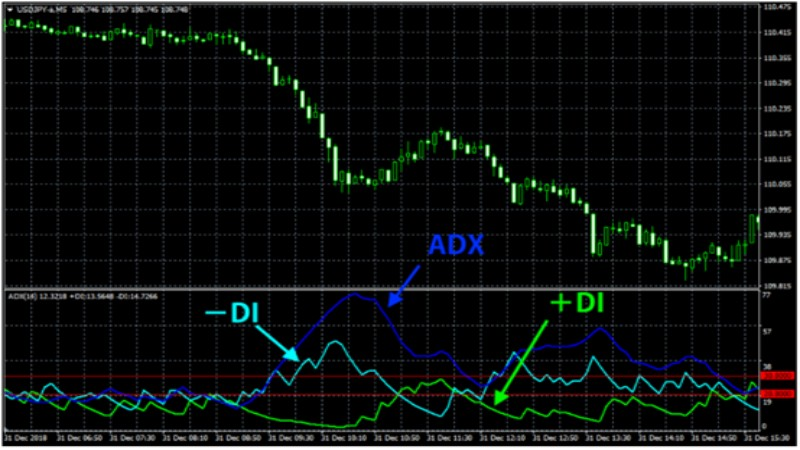
It consists of three lines: +DI, −DI, and ADX, which are used to determine whether the market has a clear directional trend. This helps traders avoid range-bound conditions and focus on true trending opportunities.
How does the DMI indicator work?
The core of the DMI indicator lies in observing the crossover between positive directional movement (+DI) and negative directional movement (−DI), and further using the strength of the ADX line to determine whether the trend has actionable value.
When +DI is greater than −DI, it indicates bullish dominance; conversely, bearish control is implied when −DI exceeds +DI. If the ADX value rises, it signifies a strengthening trend, making it suitable for trend-following strategies.
Components of the DMI indicator
The DMI consists of the following three components:
- +DI: Measures the strength of upward price movement.
- −DI: Measures the strength of downward price movement.
- ADX: Indicates the strength of a trend, regardless of direction. Through the interaction of these three components, traders can intuitively determine whether the market offers a valid entry signal. It is a widely relied upon trend analysis tool among forex and commodity traders.

Relationship Between the DMI Indicator and ADX
The DMI indicator is closely related to ADX, as ADX itself is derived from the difference between +DI and −DI. A rising ADX value indicates a developing trend. When +DI and −DI cross and ADX is above 25, it is typically seen as the beginning of a strong trend.
This is particularly important for traders using leveraged instruments such as CFDs, as strong trends present both greater opportunities and increased risks.
Application of the DMI Indicator in the Forex Market
In the forex market, the DMI indicator is particularly useful because currency pairs often exhibit prolonged trending behavior. By monitoring the crossover positions of +DI and −DI along with the strength of ADX, traders can determine whether to follow the trend.
For example, in the EUR/USD pair, when +DI continues to rise and ADX is above 30, it signals a strong bullish trend, making it suitable for buying on pullbacks.
How to Set DMI Indicator Parameters?
By default, the DMI indicator is typically set to a 14-period configuration, which is supported by most trading platforms including the UM trading system. However, frequent traders may adjust it to a 7-period setting to enhance responsiveness.
It is important to note that a shorter period may introduce more noise into the signal and should be used alongside other indicators such as MACD or Bollinger Bands for confirmation.
Comparison Between DMI and Other Technical Indicators
Compared to moving averages, the DMI indicator has the advantage of clearly indicating trend strength, while moving averages only reflect direction.
Compared to RSI, which focuses on overbought and oversold conditions, the DMI indicator provides a more reliable assessment of trend development, making it more suitable for medium-term traders.
What Are the Trading Strategies for the DMI Indicator?
Here are two common strategies:
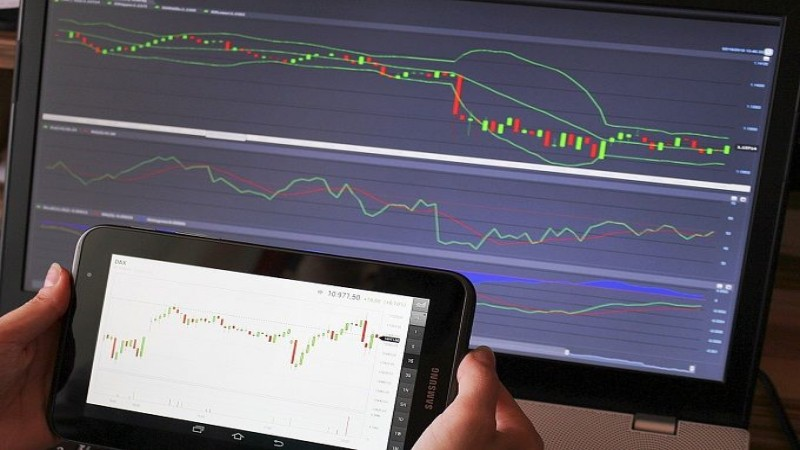
- Trend Breakout Strategy: Go long when +DI crosses above −DI and ADX is above 25; go short when −DI crosses above +DI under the same ADX condition.
- Trend-Following Entry Strategy: Build positions on pullbacks during periods of rising ADX to improve the risk-reward ratio. When using Ultima Markets, these strategies can be automated by configuring technical conditions, thereby enhancing trading efficiency.
Advantages of Using the DMI Indicator on the UM Platform
Using the DMI indicator on the UM platform offers the following advantages:
- Multi-platform support (MT4, MT5, and Web)
- Customizable technical indicator parameters
- Real-time trend updates and mobile alert features Users only need to open a trading account to access the full range of technical analysis features immediately.
Pros and Cons of the DMI Indicator
Pros:
- Effectively filters out range-bound periods
- Clear structure and easy to interpret
- Applicable across various timeframes and markets
Cons:
- Slightly lagging in signal response
- May generate frequent false signals in sideways markets It is therefore recommended to use it in conjunction with trendlines and volume indicators for cross-validation.
Real Case Analysis of the DMI Indicator
Taking the early 2023 gold trend as an example, both +DI and ADX rose simultaneously, indicating strong bullish momentum. Within the following three weeks, gold prices surged over 7%, demonstrating the practical value of the DMI indicator in real trading scenarios.

FAQ
Q1: What is the DMI indicator?
A: It is a technical indicator used to determine the strength and direction of a market trend, consisting of three lines: +DI, −DI, and ADX.
Q2: What is the difference between the DMI indicator and ADX?
A: DMI is the complete system, while ADX is the specific line within it that measures trend strength. They are used in a complementary manner.
Q3: What types of assets are suitable for the DMI indicator?
A: It is best suited for trend-driven assets such as forex, gold, crude oil, and index products.
A: It is best suited for trend-driven assets such as forex, gold, crude oil, and index products.
A: It is recommended to use it alongside RSI or Bollinger Bands to filter out false signals and improve accuracy.
Q5: Where can I practice using the DMI indicator? A: You can apply for a demo account on the UM platform to practice trading strategies risk-free.
Conclusion: Master the DMI Indicator to Master the Trend
Whether you’re a short-term speculator or a medium-to-long-term investor, the DMI indicator can help you effectively assess trend direction and strength.
On the UM platform, you can enhance your trading decision-making skills through various tools and simulations, reducing the chances of incorrect decisions and making every entry and exit more justified.
Disclaimer: This content is provided for informational purposes only and does not constitute, and should not be construed as, financial, investment, or other professional advice. No statement or opinion contained here in should be considered a recommendation by Ultima Markets or the author regarding any specific investment product, strategy, or transaction. Readers are advised not to rely solely on this material when making investment decisions and should seek independent advice where appropriate.
Latest Articles



FOLLOW US






Ultima Markets is a member of The Financial Commission, an international independent body responsible for resolving disputes in the Forex and CFD markets.

All clients of Ultima Markets are protected under insurance coverage provided by Willis Towers Watson (WTW), a global insurance brokerage established in 1828, with claims eligibility up to US$1,000,000 per account.

Ultima Markets is the first United CFD broker to be part of the United Nations Global Compact.
FOLLOW US
TRADE WITH US
RISK DISCLOSURE
Risk Warning:
Trading leveraged financial products, including Contracts for Difference (CFDs), carries a high level of risk and may result in losses exceeding your initial investment. These products are not suitable for all investors and should only be traded with funds you can afford to lose. You do not own or have any rights to the underlying assets of these derivatives (e.g., entitlement to dividends). Please ensure you fully understand the associated risks. Before trading, consider your level of experience, investment objectives, and seek independent financial advice if necessary. Refer to our legal documents and disclosures before making any trading decisions.
General Advice Warning:
The information provided on this website is general in nature and does not take into account your personal objectives, financial situation, or needs. Before acting on any advice, you should assess its appropriateness in light of your individual circumstances and consult our legal documentation.
Regional Restrictions:
The information and services on this website are not intended for residents of certain jurisdictions, including but not limited to the United States, United Kingdom, Singapore, and any jurisdictions subject to international sanctions. For further information, please contact our customer support team.
Regulatory Information:
Ultima Markets is a trading name shared amongst multiple entities operating in various jurisdictions. These following entities are authorised to operate under the Ultima Markets brand and trademarks.
-
Ultima Markets UK Limited, reference number 470325, is authorised and regulated by the Financial Conduct Authority (FCA). Registered address: 1 Blossom Yard, Fourth Floor, London, E1 6RS, UNITED KINGDOM.
-
Ultima Markets Ltd is authorised and regulated by the Financial Services Commission (FSC) of Mauritius as a Full-Service Investment Dealer (excluding Underwriting), under licence number GB 23201593.
Registered address: 2nd Floor, The Catalyst, 40 Silicon Avenue, Ebene Cybercity, 72201, Mauritius.

Copyright © 2026 Ultima Markets Ltd. All rights reserved.
-

Messenger


Continue on Messenger
Take the conversation to your Messenger account. You can return anytime.
Scan the QR code and then send the message that appears in your Messenger.
Open Messenger on this device.
-

Instagram

Continue on Instagram
Take the conversation to your Instagram account. You can return anytime.
Scan the QR code to open Instagram. Follow @ultima_markets to send a DM.
Open Instagram on this device.
-

Live Chat
-

