
Ultima Markets App
Trade Anytime, Anywhere





Important Information
This website is managed by Ultima Markets’ international entities, and it’s important to emphasise that they are not subject to regulation by the FCA in the UK. Therefore, you must understand that you will not have the FCA’s protection when investing through this website – for example:
- You will not be guaranteed Negative Balance Protection
- You will not be protected by FCA’s leverage restrictions
- You will not have the right to settle disputes via the Financial Ombudsman Service (FOS)
- You will not be protected by Financial Services Compensation Scheme (FSCS)
- Any monies deposited will not be afforded the protection required under the FCA Client Assets Sourcebook. The level of protection for your funds will be determined by the regulations of the relevant local regulator.
Note: Ultima Markets is currently developing a dedicated website for UK clients and expects to onboard UK clients under FCA regulations in 2026.
If you would like to proceed and visit this website, you acknowledge and confirm the following:
- 1.The website is owned by Ultima Markets’ international entities and not by Ultima Markets UK Ltd, which is regulated by the FCA.
- 2.Ultima Markets Limited, or any of the Ultima Markets international entities, are neither based in the UK nor licensed by the FCA.
- 3.You are accessing the website at your own initiative and have not been solicited by Ultima Markets Limited in any way.
- 4.Investing through this website does not grant you the protections provided by the FCA.
- 5.Should you choose to invest through this website or with any of the international Ultima Markets entities, you will be subject to the rules and regulations of the relevant international regulatory authorities, not the FCA.
Ultima Markets wants to make it clear that we are duly licensed and authorised to offer the services and financial derivative products listed on our website. Individuals accessing this website and registering a trading account do so entirely of their own volition and without prior solicitation.
By confirming your decision to proceed with entering the website, you hereby affirm that this decision was solely initiated by you, and no solicitation has been made by any Ultima Markets entity.
I confirm my intention to proceed and enter this website Please direct me to the website operated by Ultima Markets , regulated by the FCA in the United Kingdom

Chime IPO: Everything You Need to Know
The Chime IPO has been one of the most talked-about events in fintech this year. If you’re curious about how this digital bank made its mark on the stock market, here’s a clear breakdown.
In this article, we will be looking into all the details from its business model to IPO performance, growth story, and what it means for potential investors.
Who Is Chime? What Does Chime Do?
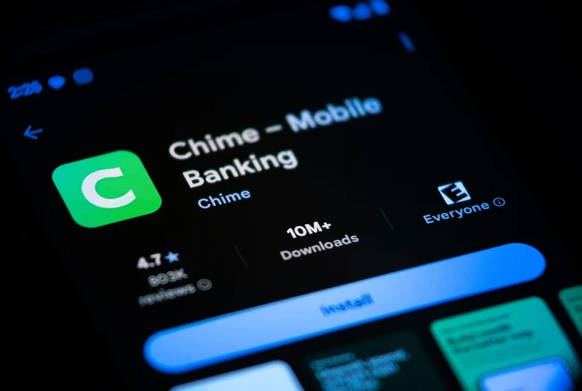
Founded in 2013 by Chris Britt (former Visa executive) and Ryan King (former Plaxo VP), Chime is a U.S.-based fintech offering mobile-first, fee-free banking services. Its mission is simple: help Americans manage money better, avoid costly fees, and access banking without stepping into a branch.
Unlike traditional banks, Chime partners with chartered banks like The Bancorp Bank to provide FDIC-insured accounts and debit cards. Its appeal lies in its user-friendly app, early paycheck access, no fees, and tools that simplify everyday banking.
The Chime IPO: A Strong Market Debut
Chime went public on June 12, 2025, in a Nasdaq debut that grabbed attention:
- IPO price: $27 per share (above marketed range).
- Opening price: $43 per share. Up 59% from IPO.
- Shares sold: 32 million, raising $864 million.
- Fully diluted valuation: $18.4 billion.
This strong performance not only showed investor confidence but also positioned Chime as a bellwether for fintech IPOs, signaling that other high-growth digital banks might follow. Lead underwriters included Morgan Stanley, Goldman Sachs, and J.P. Morgan.
Chime’s Growth Story
Chime’s rise has been fast. The company has raised $2.65 billion from private investors over the years, including DST Global, Sequoia Capital, Tiger Global, ICONIQ, and SoftBank. Its valuation trajectory shows rapid growth:
- 2019: $1.5B
- 2020: $14.5B
- 2021: $25B
- 2025 (IPO): $18.4B
This funding fueled aggressive expansion, marketing campaigns, and product development, helping Chime become a major player in U.S. digital banking.
How Chime Makes Money
Chime’s main revenue comes from interchange fees, a small cut merchants pay when users swipe their debit cards. But the company is exploring new revenue streams, including loans, credit products, and a product marketplace, following examples from rivals like Revolut.
Growth is driven largely by referrals and word of mouth, targeting Americans outside the top 25–30% income bracket. Popular features like early paycheck access and overdraft protection also help attract and retain users.
Market Potential & User Base
With its revenue model taking shape and user acquisition gaining momentum, Chime is now focused on expanding its reach and tapping into the vast U.S. market still up for grabs
- Active users: millions of Americans, mostly underbanked or younger consumers.
- Marketing spend in 2024: $520M.
- Revenue in 2024: $1.67B, up from $1.28B in 2023.
- Profitability: EBITDA-positive in 2020, showing strong potential for sustainable growth.
Currently, Chime serves less than 5% of the 200 million Americans earning $100K or less, indicating a huge opportunity to grow its user base.
Competitors & Market Landscape
As Chime expands its user base and taps further into the U.S. market, it faces a crowded and competitive landscape. Domestically, rivals like Varo, SoFi, and digital wallets such as Venmo are all vying for the attention of younger, tech-savvy consumers.
On the global stage, Chime competes with well-established neobanks such as Revolut, which had over 14.5 million users as of 2021, N26, and Nubank. The broader neobank sector remains relatively young, with over 250 digital banking operations worldwide and plenty of room for growth, consolidation, and market shakeouts in the coming years.
Chime’s mobile-first, low-fee, and highly accessible banking model gives it a strong competitive edge, but staying ahead will require continuous innovation and careful attention to customer needs in a rapidly evolving industry.
What Investors Should Take Caution
Even with a strong IPO debut, there are key risks and considerations for investors:
- Profitability is still developing: While Chime reached EBITDA profitability in 2020, heavy marketing and growth investments mean consistent net profits are not guaranteed.
- Revenue concentration & diversification: Chime depends on interchange fees, and diversification into loans, credit, and other services will be crucial for long-term growth.
- Economic sensitivity: Chime’s core user base of young, underbanked Americans could be more vulnerable to economic downturns, inflation, or shifts in consumer spending.
- Regulatory exposure: Like other fintechs, Chime must maintain robust compliance to avoid operational or regulatory setbacks.
- Intense competition: With domestic and global rivals ramping up features, Chime’s execution and product differentiation are critical.
- Market expectations: Post-IPO valuations are more conservative than earlier fintech hype, meaning investors expect real performance, not just potential.
Why the Chime IPO Matters
Chime’s IPO is more than just a milestone for the company. It reflects broader trends in the fintech and digital banking sector. Its successful debut demonstrates that digital-first, mobile-focused banking solutions continue to resonate with investors and consumers alike, even in a more cautious market environment.
The IPO also serves as a benchmark for other fintechs and neobanks considering public offerings. Chime’s $18.4 billion valuation and strong opening performance signal that companies with a clear growth strategy, strong user engagement, and scalable business models can still attract significant investor interest.
For investors and traders, Chime’s listing provides a real-world example of how rapidly growing fintechs can disrupt traditional banking, while also highlighting the importance of evaluating both growth potential and operational risks. This understanding naturally leads into the broader takeaway for anyone watching the sector: while opportunity exists, careful analysis and risk awareness remain essential.
Conclusion
The Chime IPO is a case study in how fintech can grow quickly, disrupt the banking industry, and appeal to investors. For traders, it’s a reminder that growth potential, strong market positioning, and user-focused services can make digital banks compelling, but macroeconomic and competitive risks should never be ignored.
Disclaimer: This content is provided for informational purposes only and does not constitute, and should not be construed as, financial, investment, or other professional advice. No statement or opinion contained here in should be considered a recommendation by Ultima Markets or the author regarding any specific investment product, strategy, or transaction. Readers are advised not to rely solely on this material when making investment decisions and should seek independent advice where appropriate.
Latest Articles



FOLLOW US






Ultima Markets is a member of The Financial Commission, an international independent body responsible for resolving disputes in the Forex and CFD markets.

All clients of Ultima Markets are protected under insurance coverage provided by Willis Towers Watson (WTW), a global insurance brokerage established in 1828, with claims eligibility up to US$1,000,000 per account.

Ultima Markets is the first United CFD broker to be part of the United Nations Global Compact.
FOLLOW US
TRADE WITH US
RISK DISCLOSURE
Risk Warning:
Trading leveraged financial products, including Contracts for Difference (CFDs), carries a high level of risk and may result in losses exceeding your initial investment. These products are not suitable for all investors and should only be traded with funds you can afford to lose. You do not own or have any rights to the underlying assets of these derivatives (e.g., entitlement to dividends). Please ensure you fully understand the associated risks. Before trading, consider your level of experience, investment objectives, and seek independent financial advice if necessary. Refer to our legal documents and disclosures before making any trading decisions.
General Advice Warning:
The information provided on this website is general in nature and does not take into account your personal objectives, financial situation, or needs. Before acting on any advice, you should assess its appropriateness in light of your individual circumstances and consult our legal documentation.
Regional Restrictions:
The information and services on this website are not intended for residents of certain jurisdictions, including but not limited to the United States, United Kingdom, Singapore, and any jurisdictions subject to international sanctions. For further information, please contact our customer support team.
Regulatory Information:
Ultima Markets is a trading name shared amongst multiple entities operating in various jurisdictions. These following entities are authorised to operate under the Ultima Markets brand and trademarks.
-
Ultima Markets UK Limited, reference number 470325, is authorised and regulated by the Financial Conduct Authority (FCA). Registered address: 1 Blossom Yard, Fourth Floor, London, E1 6RS, UNITED KINGDOM.
-
Ultima Markets Ltd is authorised and regulated by the Financial Services Commission (FSC) of Mauritius as a Full-Service Investment Dealer (excluding Underwriting), under licence number GB 23201593.
Registered address: 2nd Floor, The Catalyst, 40 Silicon Avenue, Ebene Cybercity, 72201, Mauritius.

Copyright © 2025 Ultima Markets Ltd. All rights reserved.
-

Messenger


Continue on Messenger
Take the conversation to your Messenger account. You can return anytime.
Scan the QR code and then send the message that appears in your Messenger.
Open Messenger on this device.
-

Instagram

Continue on Instagram
Take the conversation to your Instagram account. You can return anytime.
Scan the QR code to open Instagram. Follow @ultima_markets to send a DM.
Open Instagram on this device.
-

Live Chat
-

