
Ultima Markets App
Trade Anytime, Anywhere





Important Information
This website is managed by Ultima Markets’ international entities, and it’s important to emphasise that they are not subject to regulation by the FCA in the UK. Therefore, you must understand that you will not have the FCA’s protection when investing through this website – for example:
- You will not be guaranteed Negative Balance Protection
- You will not be protected by FCA’s leverage restrictions
- You will not have the right to settle disputes via the Financial Ombudsman Service (FOS)
- You will not be protected by Financial Services Compensation Scheme (FSCS)
- Any monies deposited will not be afforded the protection required under the FCA Client Assets Sourcebook. The level of protection for your funds will be determined by the regulations of the relevant local regulator.
Note: Ultima Markets is currently developing a dedicated website for UK clients and expects to onboard UK clients under FCA regulations in 2026.
If you would like to proceed and visit this website, you acknowledge and confirm the following:
- 1.The website is owned by Ultima Markets’ international entities and not by Ultima Markets UK Ltd, which is regulated by the FCA.
- 2.Ultima Markets Limited, or any of the Ultima Markets international entities, are neither based in the UK nor licensed by the FCA.
- 3.You are accessing the website at your own initiative and have not been solicited by Ultima Markets Limited in any way.
- 4.Investing through this website does not grant you the protections provided by the FCA.
- 5.Should you choose to invest through this website or with any of the international Ultima Markets entities, you will be subject to the rules and regulations of the relevant international regulatory authorities, not the FCA.
Ultima Markets wants to make it clear that we are duly licensed and authorised to offer the services and financial derivative products listed on our website. Individuals accessing this website and registering a trading account do so entirely of their own volition and without prior solicitation.
By confirming your decision to proceed with entering the website, you hereby affirm that this decision was solely initiated by you, and no solicitation has been made by any Ultima Markets entity.
I confirm my intention to proceed and enter this website Please direct me to the website operated by Ultima Markets , regulated by the FCA in the United Kingdom

Will Silver Prices Go Up in 2025-2026?
Silver has been one of the wildest stories of 2025. Prices have climbed to record highs near 58 to 59 dollars per ounce, roughly doubling since the start of the year and beating gold’s already strong rally. It is no surprise that more traders and investors are asking the same question: will silver prices go up from here or finally cool off.
Moves like this are why traders sometimes call silver the Devil’s metal. The market is only about a tenth the size of gold, so when supply is tight or investors rush in, prices can swing violently.
So will silver prices go up from here, or is a sharp correction more likely? There is no simple yes or no. Silver has strong long term support, but it is already expensive and extremely volatile. Here’s how the main drivers, upside factors and risks stack up.
Where Silver Prices Stand Now
In late 2025:
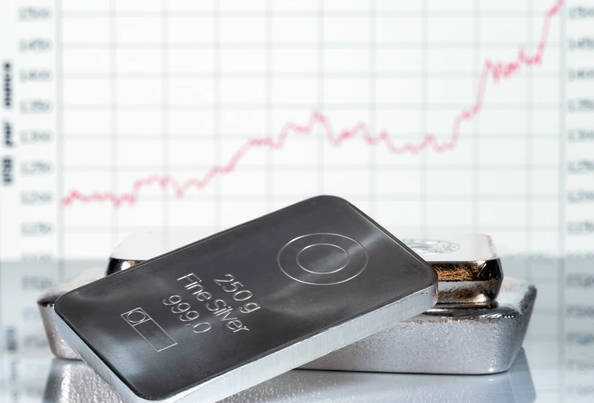
- Silver futures have traded above 59 dollars per ounce, with spot prices near 57 to 58 dollars, setting repeated record highs.
- Depending on the starting point, prices are up roughly 90 to 100 percent year to date, while gold is up about 60 percent.
The physical market also looks tight. LBMA vault stocks in London have fallen from about 31 thousand metric tons in mid 2022 to around 22 thousand tons in early 2025, a drop of nearly one third. At times this year, overnight borrowing costs jumped to extreme levels and some buyers even flew silver by air rather than wait for sea freight.
Silver is not starting from cheap levels. It is already rich compared with its own history, which matters when thinking about the next move.
What Is Driving Silver Prices
Silver’s 2025 surge mainly reflects four forces working together: tight supply, industrial and green tech demand, macro and safe haven flows, and strong physical buying in key markets.
Structural Supply Squeeze
Industry data suggests the silver market has run multi year deficits since 2021, with total demand exceeding mine supply plus recycling by an amount close to a full year of production. Mine output has stagnated or declined in several key regions, and inventories in major hubs have fallen, leaving a much thinner buffer of available metal.
Industrial And Green Technology Demand
More than half of silver demand now comes from industry. The biggest growth drivers are solar panels, electric vehicles and advanced electronics.
Solar usage has climbed from around 60 million ounces in 2015 to well over 200 million ounces per year, and a typical EV already uses tens of grams of silver in wiring and power electronics. Even if 2025 sees a small dip as high prices bite, the longer term direction for these sectors still points upward.
Macro And Safe Haven Flows
Expectations of Federal Reserve rate cuts, concern over debt and growth, and bouts of crypto or currency market stress have pushed investors toward precious metals. Lower real interest rates and a softer US dollar make non yielding assets like silver more attractive. Because the silver market is much smaller than gold, these flows translate into bigger percentage moves.
Physical Buying In Key Markets
Countries such as India, the world’s largest silver consumer, add another layer of demand. India uses thousands of metric tons of silver a year in jewellery, utensils and ornaments, much of it imported. Seasonal buying around harvest and festivals like Diwali has helped drive local prices to record highs in rupee terms, reinforcing global demand when dips occur.
Upside Potential And Downsides To Watch
Looking beyond daily volatility, there are solid reasons why silver prices could stay supported or move higher over the medium term, but also clear risks that could pull the market back.
Reasons Silver Prices Could Keep Rising
Structural deficits and tight inventories
Ongoing supply deficits and lean inventories mean the market has a limited safety cushion. As long as demand runs ahead of new mine supply and modest recycling, any fresh wave of investor or industrial buying can squeeze prices higher from already elevated levels.
Growth in green and high tech uses
The global push toward electrification and decarbonisation is still in its early stages. Expanding solar capacity, rising EV adoption and growing demand for data centres and advanced electronics all point to structurally higher industrial demand over the coming decade. Because silver combines safe haven appeal with critical industrial uses, it benefits from both risk off episodes and long term technology trends.
Supportive precious metals backdrop
Many banks and international institutions expect precious metals to remain relatively elevated through at least 2026, supported by safe haven flows, central bank interest in gold and ongoing use of silver in green technologies. That does not mean prices move in a straight line, but it does suggest the longer term bias is more sideways to higher than straight back to old lows.
Risks That Could Pull Silver Prices Lower
Demand destruction at high prices
When prices surge, some users simply cut back. High silver prices and softer growth can encourage manufacturers to thrift, delay projects or switch to alternatives, which can slow demand more than markets expect.
Higher for longer interest rates
The bullish narrative assumes real interest rates will drift lower as central banks cut or tolerate slightly higher inflation. If inflation falls quickly and policymakers keep rates high, real yields and the dollar could stay strong, reducing the appeal of non yielding metals like silver.
Sharp corrections after a parabolic move
Silver has roughly doubled in less than a year, which is extreme even by its own standards. Historically, silver often moves more than gold in percentage terms both up and down, and corrections of 20 to 30 percent are not unusual after parabolic rallies.
Thrifting and technological substitution
As prices rise, manufacturers have a strong incentive to use less silver. Solar cell producers are already working with thinner silver coatings per panel even as total installations rise. Over time, this thrifting can limit how fast industrial demand grows and cap the level at which prices remain sustainable.
What The Gold Silver Ratio Suggests
One popular valuation tool is the gold silver ratio, which measures how many ounces of silver are needed to buy one ounce of gold.
Since 2000, it has averaged around 69 to 70. In 2025 it briefly spiked above 100 before silver caught up, and it has since dropped into the high 70s, still above its long term average. Some investors see a very high ratio as a sign that silver is undervalued relative to gold within a broader precious metals bull market. It is not a rule, but it adds to the case that silver may not have exhausted its upside.
What Analysts Are Saying About Future Silver Prices
Large institutions differ on exact numbers but share a similar tone:
- Deutsche Bank expects silver ETF holdings to reach around 1.1 billion ounces by 2026, a record, and forecasts an average price near 55 dollars per ounce that year.
- Other bank and industry forecasts generally expect silver to stay expensive and volatile, with average prices in the mid 40s to mid 50s over the next few years, plus upside and downside scenarios depending on rates and demand.
Taken together, these forecasts suggest that the long term answer to will silver prices go up is probably yes in terms of average levels, but with enough volatility that sharp setbacks are still very likely along the way.
So Will Silver Prices Go Up?
In the short term, after such a dramatic rally, silver could pull back, move sideways or spike again, depending on how interest rate expectations, growth data and risk sentiment evolve. The market is tight, but a lot of optimism is already priced in.
Over a multi year horizon, the combination of structural supply deficits, growing green and high tech demand and a broadly supportive backdrop for precious metals gives silver a credible case for higher average prices than in the past decade, even if the path is uneven.
Instead of looking for a simple yes or no to will silver prices go up, it is more useful to ask under what conditions silver is likely to rise or fall, and how much risk you are willing to take while those conditions play out.
Disclaimer: This content is provided for informational purposes only and does not constitute, and should not be construed as, financial, investment, or other professional advice. No statement or opinion contained here in should be considered a recommendation by Ultima Markets or the author regarding any specific investment product, strategy, or transaction. Readers are advised not to rely solely on this material when making investment decisions and should seek independent advice where appropriate.
Latest Articles



FOLLOW US






Ultima Markets is a member of The Financial Commission, an international independent body responsible for resolving disputes in the Forex and CFD markets.

All clients of Ultima Markets are protected under insurance coverage provided by Willis Towers Watson (WTW), a global insurance brokerage established in 1828, with claims eligibility up to US$1,000,000 per account.

Ultima Markets is the first United CFD broker to be part of the United Nations Global Compact.
FOLLOW US
TRADE WITH US
RISK DISCLOSURE
Risk Warning:
Trading leveraged financial products, including Contracts for Difference (CFDs), carries a high level of risk and may result in losses exceeding your initial investment. These products are not suitable for all investors and should only be traded with funds you can afford to lose. You do not own or have any rights to the underlying assets of these derivatives (e.g., entitlement to dividends). Please ensure you fully understand the associated risks. Before trading, consider your level of experience, investment objectives, and seek independent financial advice if necessary. Refer to our legal documents and disclosures before making any trading decisions.
General Advice Warning:
The information provided on this website is general in nature and does not take into account your personal objectives, financial situation, or needs. Before acting on any advice, you should assess its appropriateness in light of your individual circumstances and consult our legal documentation.
Regional Restrictions:
The information and services on this website are not intended for residents of certain jurisdictions, including but not limited to the United States, United Kingdom, Singapore, and any jurisdictions subject to international sanctions. For further information, please contact our customer support team.
Regulatory Information:
Ultima Markets is a trading name shared amongst multiple entities operating in various jurisdictions. These following entities are authorised to operate under the Ultima Markets brand and trademarks.
-
Ultima Markets UK Limited, reference number 470325, is authorised and regulated by the Financial Conduct Authority (FCA). Registered address: 1 Blossom Yard, Fourth Floor, London, E1 6RS, UNITED KINGDOM.
-
Ultima Markets Ltd is authorised and regulated by the Financial Services Commission (FSC) of Mauritius as a Full-Service Investment Dealer (excluding Underwriting), under licence number GB 23201593.
Registered address: 2nd Floor, The Catalyst, 40 Silicon Avenue, Ebene Cybercity, 72201, Mauritius.

Copyright © 2025 Ultima Markets Ltd. All rights reserved.
-

Messenger


Continue on Messenger
Take the conversation to your Messenger account. You can return anytime.
Scan the QR code and then send the message that appears in your Messenger.
Open Messenger on this device.
-

Instagram

Continue on Instagram
Take the conversation to your Instagram account. You can return anytime.
Scan the QR code to open Instagram. Follow @ultima_markets to send a DM.
Open Instagram on this device.
-

Live Chat
-

